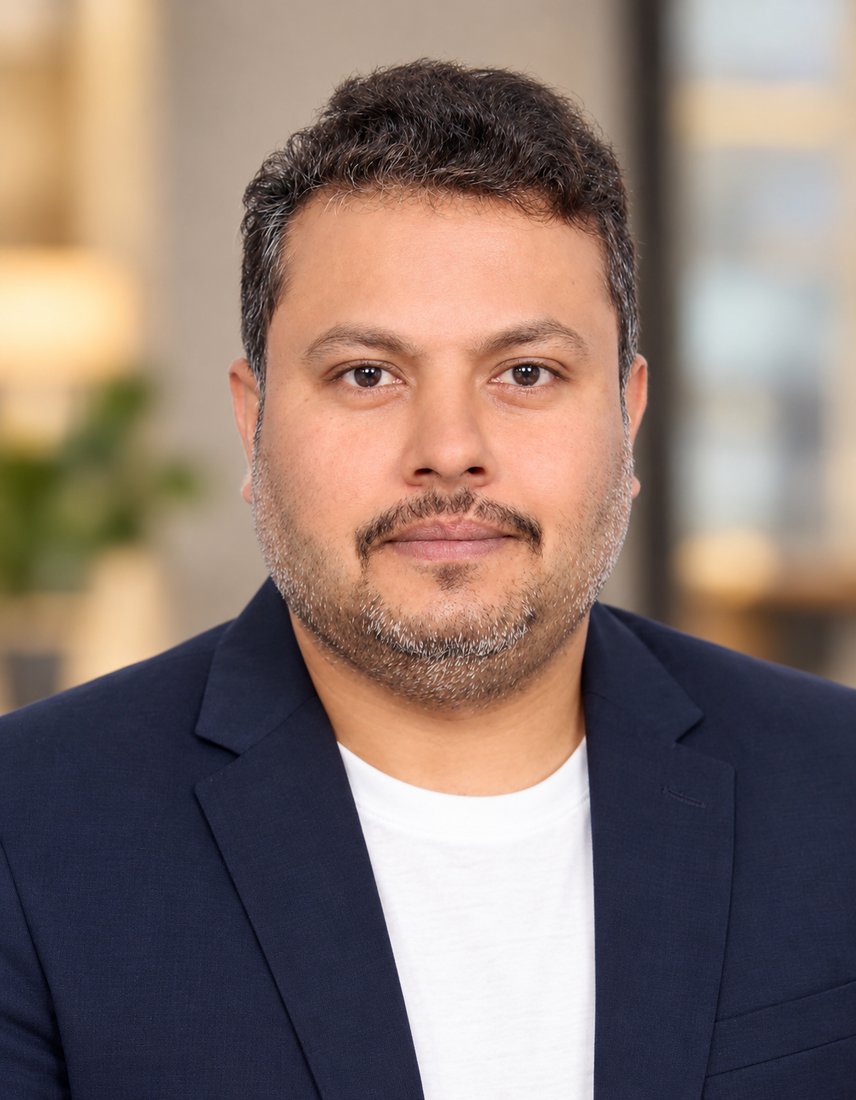
Hey, I’m glad you’re here
Thanks for stopping by!
I’m a Postdoctoral Research Scientist at the Laboratoire de Météorologie Dynamique (LMD) - IPSL, where I study how atmospheric pollutants interact with meteorology and climate across South and Southeast Asia. But if you’d told the 2011 version of me - freshly graduated in electronics and communication engineering, about to spend a year working on telecom systems in Eastern India - that I’d eventually be chasing black carbon up in the Himalayas, I don’t think he’d have believed you.
Most of my work orbits one question: what happens when short-lived climate pollutants - black carbon especially - meet the world’s most climate-sensitive mountain system? I trace how these particles travel, deposit, and reshape radiative forcing across the Hindu Kush Himalaya, and what that means for glacier melt, snow albedo, and the water resources millions of people downstream depend on.
About me
Electronics engineer turned atmospheric scientist, still most at home somewhere between a supercomputer cluster and a glacier. Drawn to the places where air, ice, and people meet - and to understanding the systems that connect them.
My path here wasn’t a straight line. I started in electronics and communication engineering, and then followed a growing pull toward environmental science - first through a master’s from Central University of Rajasthan and later through a Ph.D. at IIT Roorkee.
- Ph.D. in Atmospheric Science ∙ Indian Institute of Technology Roorkee ∙ 2024
- M.Sc. in Environmental Science ∙ Central University of Rajasthan ∙ 2016
- B.Tech. in Electronics & Communication Engineering ∙ Gautam Buddh Technical University ∙ 2011
How I got here
My journey into atmospheric and cryosphere science began slowly, then all at once. A telecom job paid the bills but left me curious about a bigger question: what is pollution actually doing to the air, water, and ice we depend on? So, I returned to university to pursue environmental science, where I ended up measuring methane emissions across the semi-arid land uses of Rajasthan. Unglamorous, field-heavy work, and I loved it.
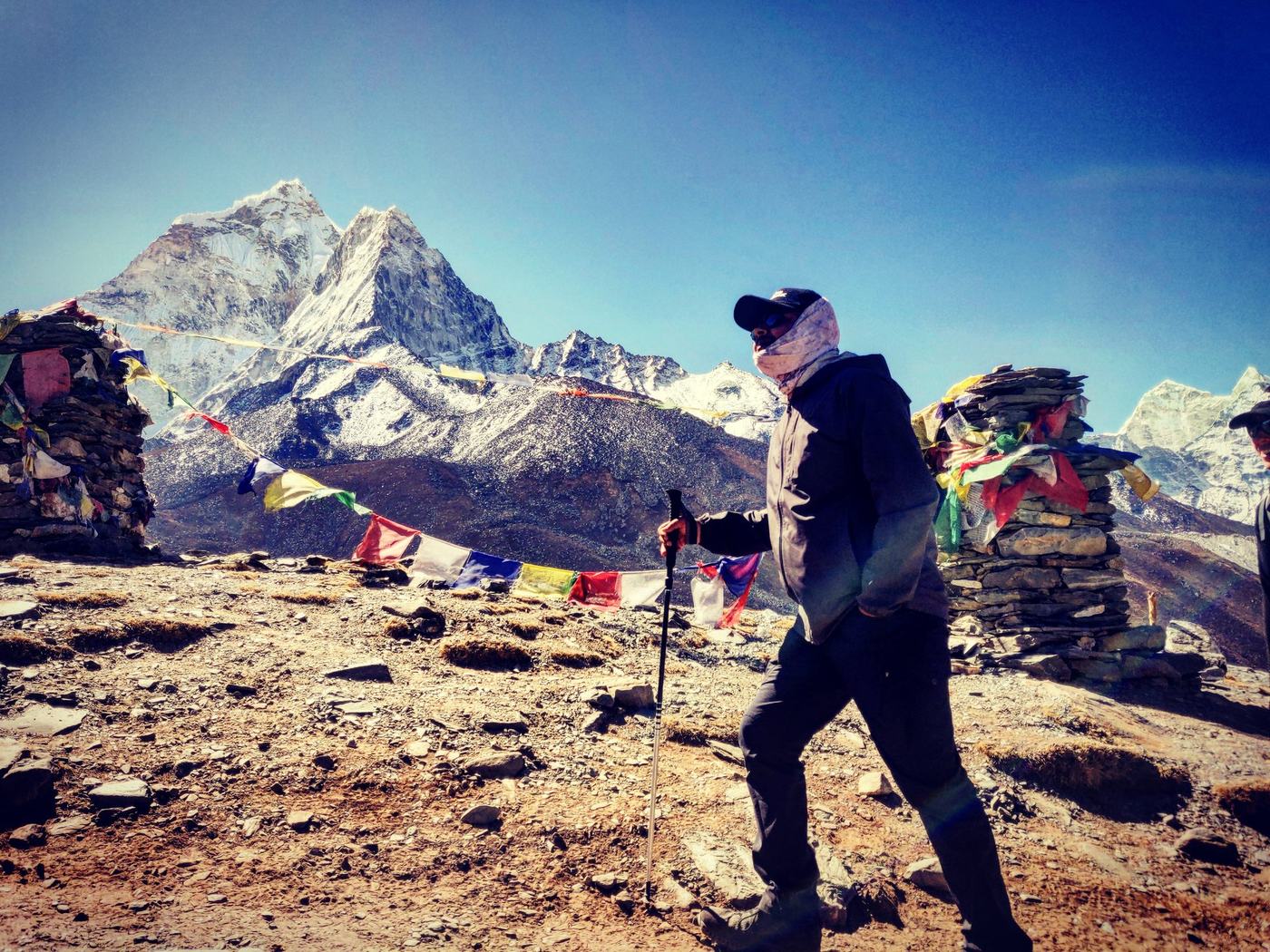
That work eventually led me to the Himalayas. At IIT Roorkee and subsequently ICIMOD in Kathmandu, I worked on in-situ measurements, atmospheric remote sensing, and glacier energy and mass balance modeling. Then came the expedition that remains pivotal to most of my stories: in 2019, I joined National Geographic’s Perpetual Planet Everest Expedition, where I measured light-absorbing pollutants like black carbon and dust, in snow at Everest Base Camp. That event fueled my curiosity about how air pollution affects mountain landscapes and water resources.
During my Ph.D. at IIT Roorkee, I studied black carbon in the Hindu Kush Himalaya, combining satellite data with regional climate and general circulation models. Eventually, the problems I was exploring began to overlap with policy, so I pursued a diploma in Environmental Law and Policy.
- Post Graduate Diploma in Environmental Law and Policy ∙ National Law University Delhi ∙ 2022
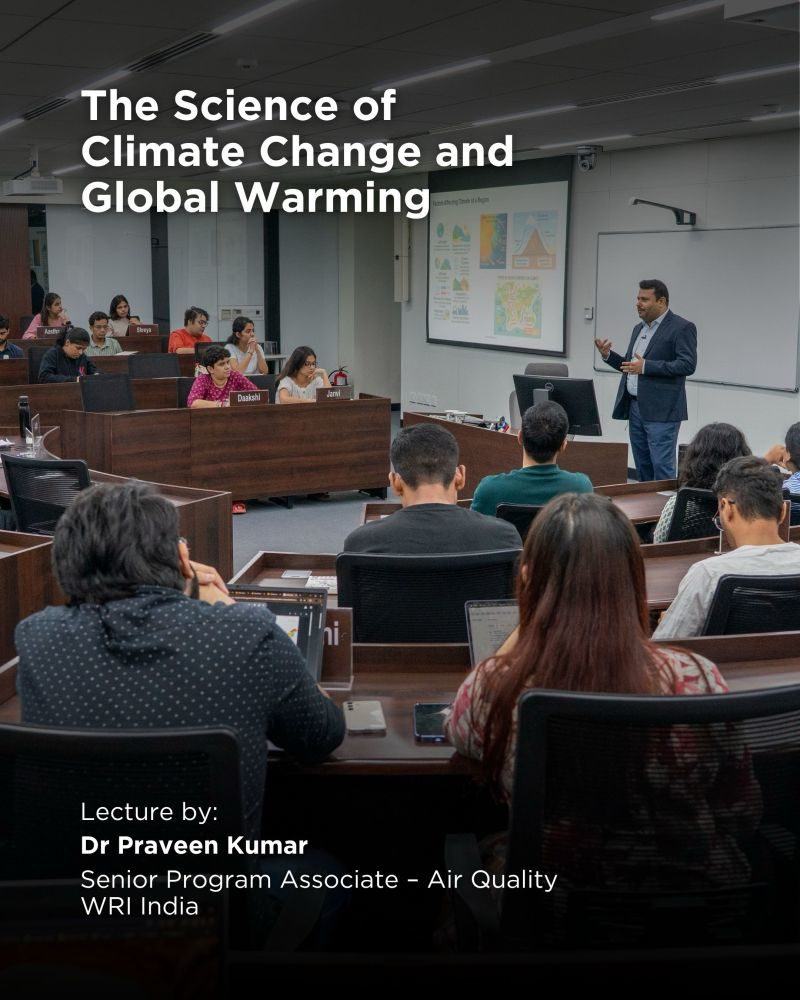
Before moving to Palaiseau, I spent nearly two years as a Senior Program Associate - Air Quality at WRI India, where I engaged directly with the Gorakhpur city administration to formulate pollution reduction strategies across multiple sectors, including transportation, waste, industry, and household energy, and assisted in translating scientific analyses into implementable policies for officials.
What I’m working on now
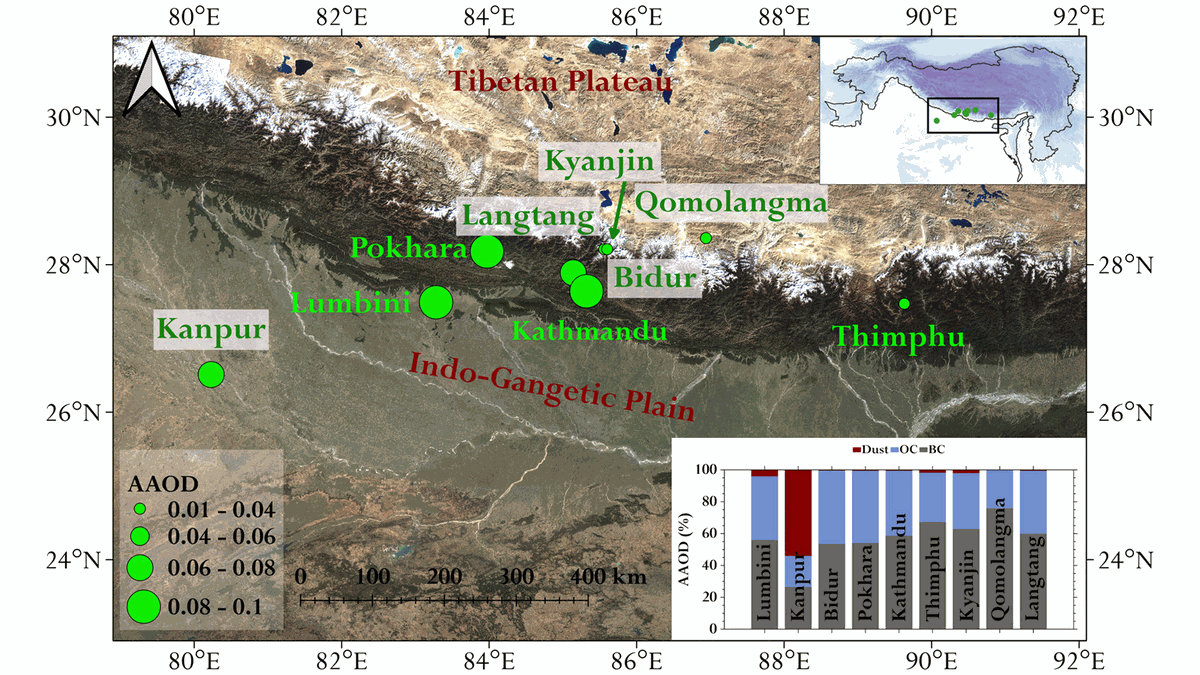
At LMD, my focus has widened from the Himalaya to the wider South and Southeast Asian region: how emissions, meteorology, and climate interact to shape air quality and its impacts. Recent papers cover aerosol composition and transport in the Central Himalaya, black carbon trends across the region, and collaborations on glacier mass loss and winter weather at the summit of Everest.
Let’s connect
Have a question, an idea, or an interest in collaborating? I’d love to hear from you. I’m always happy to connect with people interested in atmospheric science, air pollution, climate, and the cryosphere, or simply in exploring interesting scientific questions together.
Lately …
Talks
Expeditions
No matching items
News
No matching items
Publications
No matching items