Abstract
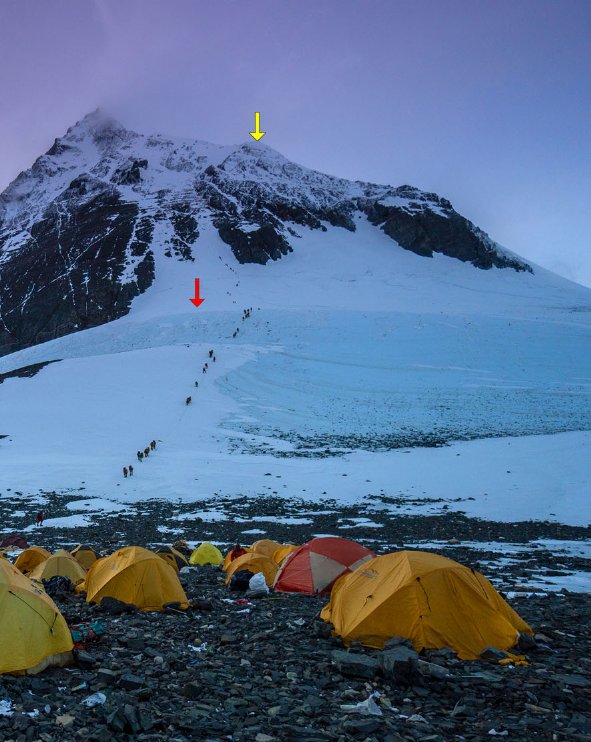
Mountain glacier systems are decreasing in volume worldwide yet relatively little is known about their upper reaches (>5000 m). Here we show, based on the world’s highest ice core and highest automatic weather stations, the significant and increasing role that melting and sublimation have on the mass loss of even Mt. Everest’s highest glacier (South Col Glacier, 8020 m). Estimated contemporary thinning rates approaching ~2 m a-1 water equivalent (w.e.) indicate several decades of accumulation may be lost on an annual basis now that glacier ice has been exposed. These results identify extreme sensitivity to glacier surface type for high altitude Himalayan ice masses and forewarn of rapidly emerging impacts as Mt. Everest’s highest glacier appears destined for rapid retreat.
Key figure